The Benefits of Robotic Laser Welding for Manufacturers
Published on 7 July 2025
Robotic laser welding combines the speed and accuracy of laser technology with the consistency of automation. For manufacturers working with tight tolerances, high-quality finishes, or high-throughput demands, robotic laser welding offers a practical way to increase output without compromising precision.
In this article, we explore the key benefits of robotic laser welding and how it helps manufacturers improve quality, efficiency, and production output.
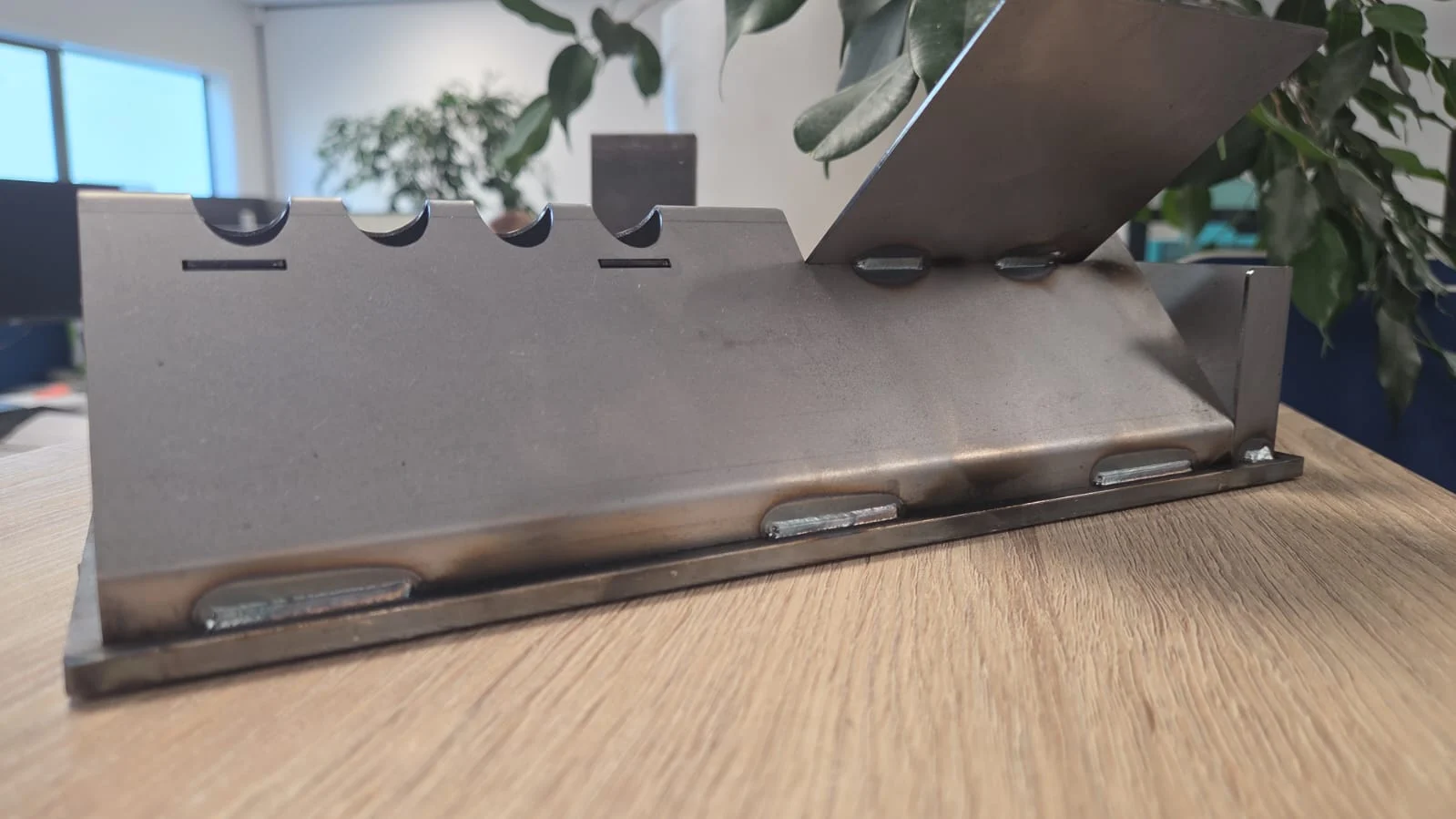
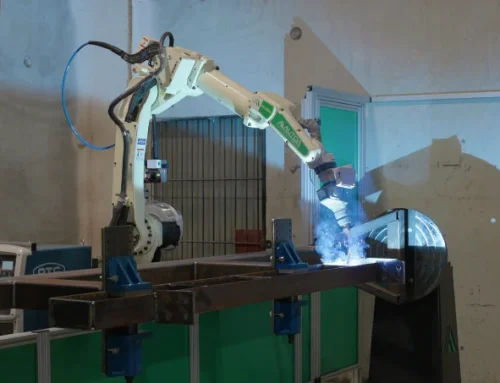
Laser-welded mild steel fixture, welded with the Autoa laser cell.
What Is Robotic Laser Welding?
Robotic laser welding uses a programmable robotic arm equipped with a laser head to carry out precision welds. Unlike MIG or TIG welding, which rely on an electric arc and often require filler wire, laser welding focuses a concentrated beam of light to create narrow, high-strength welds with minimal heat input.
These systems are ideal for repetitive tasks and can be integrated with offline programming, CAD data, and vision systems for greater efficiency and control.
Why More Manufacturers Are Choosing Robotic Laser Welding
1. Precision and Repeatability at Scale
Robotic laser welding delivers precise weld placement and uniform results across every part—no matter the batch size. This level of repeatability is critical for industries where accuracy directly impacts performance, such as battery manufacturing, medical devices, or sensor housings. Because robotic systems eliminate variation caused by fatigue or manual handling, they provide dependable quality even on the most detailed workpieces.
2. Cleaner, Faster, and More Efficient
Laser welding is a clean process, producing narrow seams, little to no spatter, and minimal distortion. When automated, it becomes even more efficient. Cycle times are shortened, downtime is reduced, and the need for post-weld finishing is often eliminated. This results in higher output and lower processing costs, especially for stainless steel and aluminium assemblies that require tight tolerances.
3. Built for Integration and Scale
Robotic laser welding cells are designed to integrate into flexible manufacturing environments. They can be programmed offline, linked to CAD models, and equipped with vision or sensing systems for precise part alignment. Whether you’re scaling up production or running short, high-value batches, robotic laser welding provides a future-ready platform, with the flexibility to adapt as demand grows.
Ideal Applications
Robotic laser welding is especially suited to applications where speed, cosmetic finish, and dimensional accuracy are critical. It’s commonly applied to stainless steel and aluminium parts, delicate assemblies, and components that benefit from low heat input and minimal post-processing.
Whether you’re handling short-run precision work or scaling up production volumes, robotic laser welding offers a reliable platform for consistent, high-quality output.
Autoa has proven expertise in robotic MIG, TIG, and laser welding, supporting manufacturers across Australia and New Zealand with local service. Our team includes experts based in both countries, providing tailored systems and practical support built on hands-on experience.
If you’re exploring laser welding, reach out, our in-house demo robot is available for customer part trials, so you can see exactly how it performs on your components.
Talk to us today for no-obligation advice tailored to your parts and process, or to arrange a demo trial with your components.
hello@autoaweld.com | AU: 1800 573 228 | NZ: 0800 37 55 66
Share this article