Autoa Launches AutoaMotion Welding Positioners Across Australia and New Zealand.
Published on 18 February 2026
Autoa Robot Welding has officially launched AutoaMotion welding positioners, a new range of positioners developed to support both manual and robotic welding applications. AutoaMotion welding positioners are designed to improve weld access, increase arc time, and reduce manual handling across heavy fabrication environments. The range can be configured as part of a new configured robot welding cell, integrated into an existing system, or installed as a standalone solution for manual welding.
This launch expands Autoa’s capability beyond robotic welding cells, providing manufacturers with positioner technology, software integration, and local service support across Australia and New Zealand.
Engineered For Productivity
AutoaMotion positioners are built to rotate and tilt fabricated components into the most productive welding position. By bringing the weld into an optimal orientation, manufacturers can reduce out of position welding and improve consistency across production runs.
In structural steel and heavy fabrication, positioning directly affects weld quality and throughput. When components such as beams, frames, pipe assemblies, or transport chassis are fixed in a flat or horizontal position, operators and robots can maintain more consistent torch angles and travel speeds. Each AutoaMotion welding positioner is selected based on load capacity, part geometry, and centre of gravity, ensuring it matches the production requirement.
AutoaMotion Models and Ranges
The AutoaMotion range includes multiple configurations to suit different fabrication needs. Single axis positioners are suited to smaller assemblies and medium weight components. These units provide controlled rotation and are commonly used in general fabrication workshops and robotic welding cells handling repeat parts.
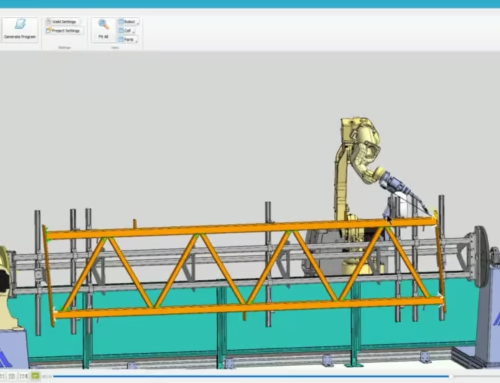
Head and tailstock positioners support longer components such as structural beams, frames, and chassis. This configuration allows even load distribution and stable rotation across extended workpieces. Heavy duty positioners are available for large structural steel and transport applications where higher load capacities are required. These units are engineered for demanding fabrication environments and continuous production.
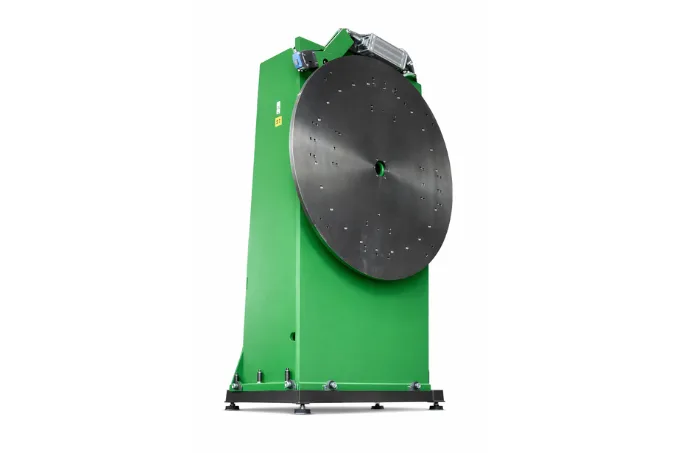
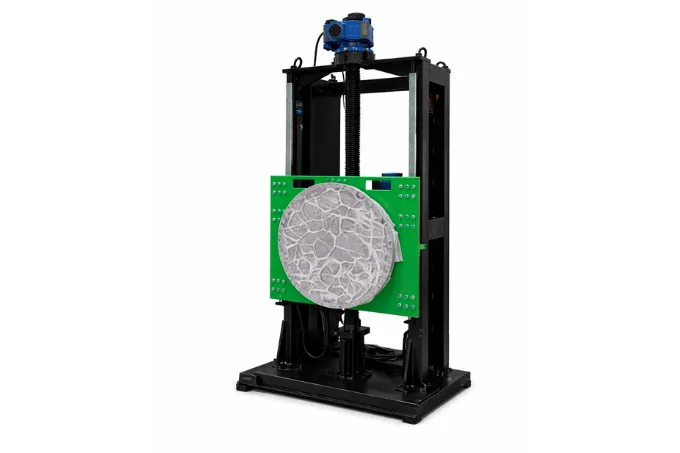
AutoaMotion Single Axis Fixed Height Positioner
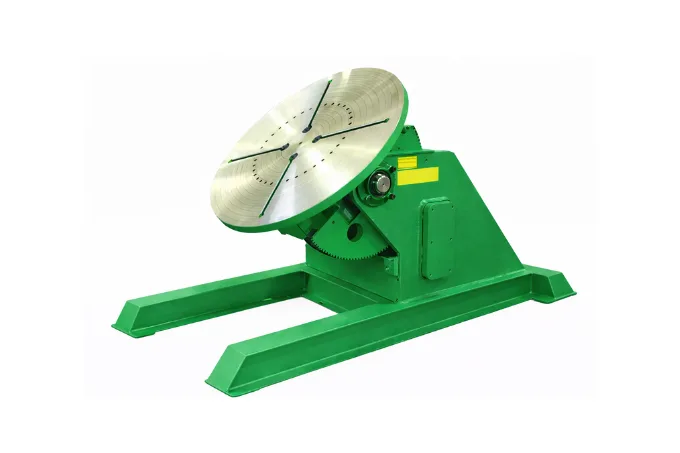
AutoaMotion Single Axis Adjustable Height Positioner
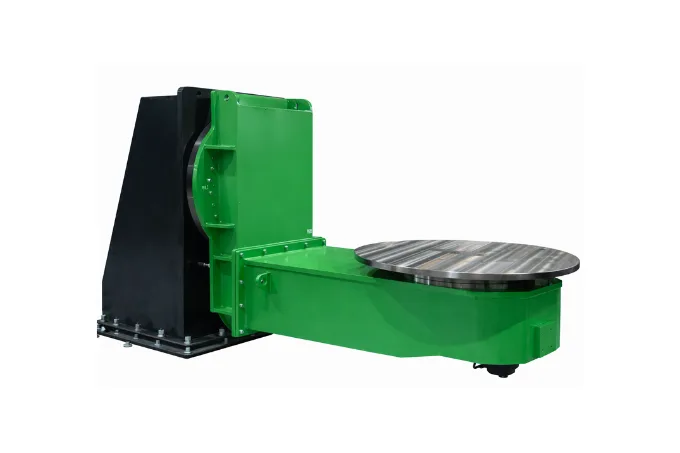
AutoaMotion Turn Tilt Axis Positioner
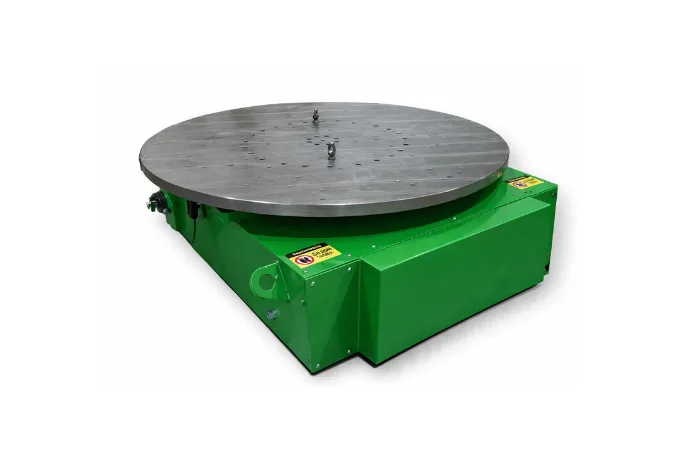
AutoaMotion Horizontal Turn Table Positioner
AutoaMotion Sky Hook Positioner
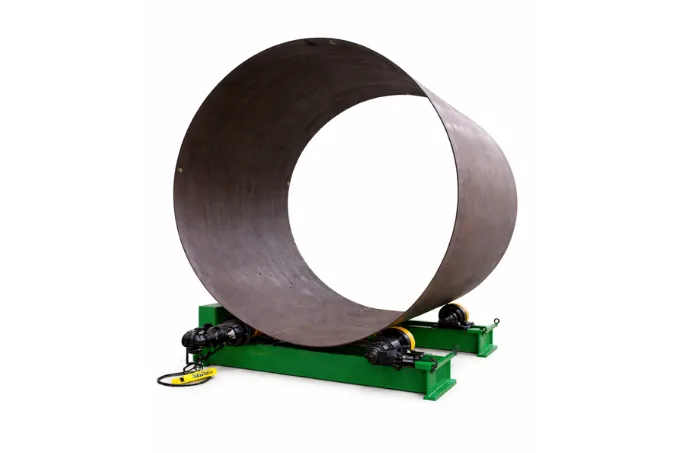
AutoaMotion Turning Rolls Positioner
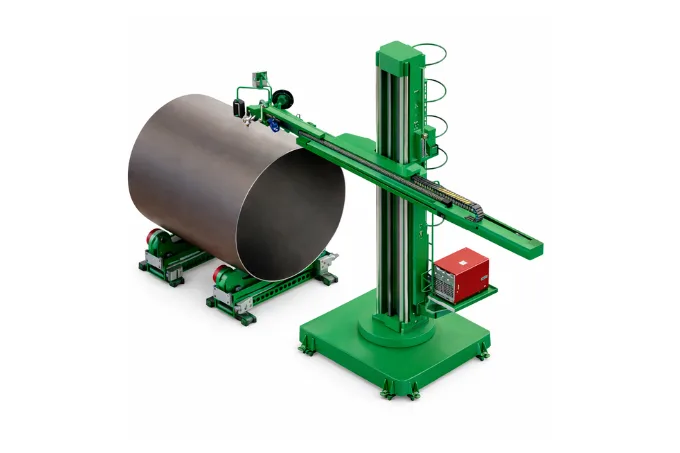
AutoaMotion Column and Boom Positioner
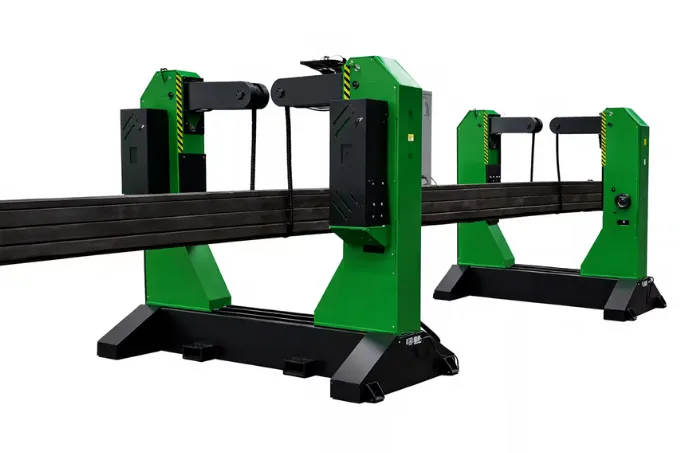
AutoaMotion Beam Chain Rotator
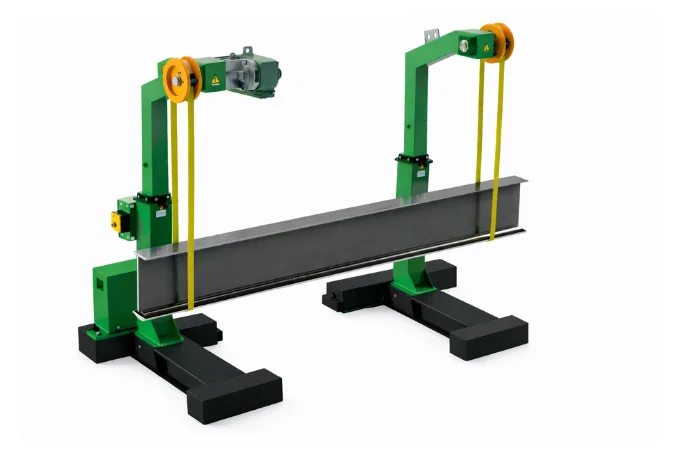
AutoaMotion Beam Belt Rotator
Designed for Robotic and Manual Welding
AutoaMotion welding positioners are equally suited to robotic welding and manual welding environments. In robotic welding, synchronised positioners allow the robot to maintain optimal welding parameters while the workpiece rotates. This improves weld consistency and increases usable arc time. In manual welding areas, positioners reduce crane movements and repetitive repositioning of heavy components. Operators can rotate assemblies into position safely, supporting improved ergonomics and workflow efficiency. For manufacturers looking to increase productivity without increasing labour, welding positioners often represent a direct and measurable improvement.
Retrofit or New System Integration
AutoaMotion welding positioners are designed for flexibility. For new projects, positioners can be specified as part of a complete robotic welding installation. Controls, safety integration, and system configuration are managed as one engineered solution.
For manufacturers who already operate a robot welding system, AutoaMotion welding positioners can be retrofitted to expand capability. This is particularly relevant where part sizes have increased or weld access is limiting performance. With local engineering and service support across Australia and New Zealand, Autoa provides commissioning, integration assistance, and ongoing technical support.
The launch of AutoaMotion welding positioners expands Autoa’s capability to deliver complete welding systems. Autoa works directly with customers to specify and configure the right positioner for each application, improving weld access, reducing manual handling, and increasing productivity.
[email protected] | AU: 1800 573 228 | NZ: 0800 37 55 66
Share this article