5 Ways Collaborative Welding Supports Smarter Production
Published on 16 July 2025
Collaborative welding is making it easier for manufacturers to introduce robotic welding into smaller or more flexible workshops. It allows safe operation near people and suits work that changes often, like short runs or varied part types.
Autoa-CoWeld is one example of how collaborative welding is being used across Australia and New Zealand. Built around an OTC Daihen collaborative robot, the system delivers clean, consistent welds in a compact format that is simple to install and operate.
Here are five reasons collaborative welding is becoming a practical option for manufacturers.

1. No Guarding Needed
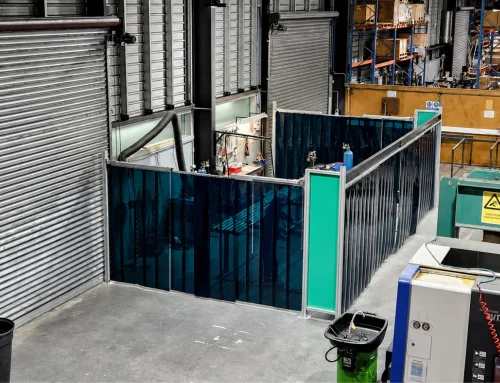
Collaborative robots are designed to work safely next to people. They run at lower speeds, monitor contact, and stop automatically if something gets in the way.
Fixed guarding is often not required, as long as the system meets the relevant safety standards. Autoa-CoWeld is designed to comply with ISO 10218-1 and ISO/TS 15066, and these requirements are covered as part of the install process.
Autoa works with you to make sure the system is safe, compliant, and fit for your workshop.
2. Built for Welding from the Start
The robot arm at the centre of Autoa-CoWeld is purpose-built for arc welding. Developed by OTC Daihen, it delivers the precision, speed, and reliability required for consistent weld quality across a wide range of materials.
Paired with a Daihen digital power source and optional push-pull torch, the system produces stable, repeatable results in mild steel, stainless steel, and aluminium.
This level of integration supports high-quality welding with minimal adjustment between jobs.
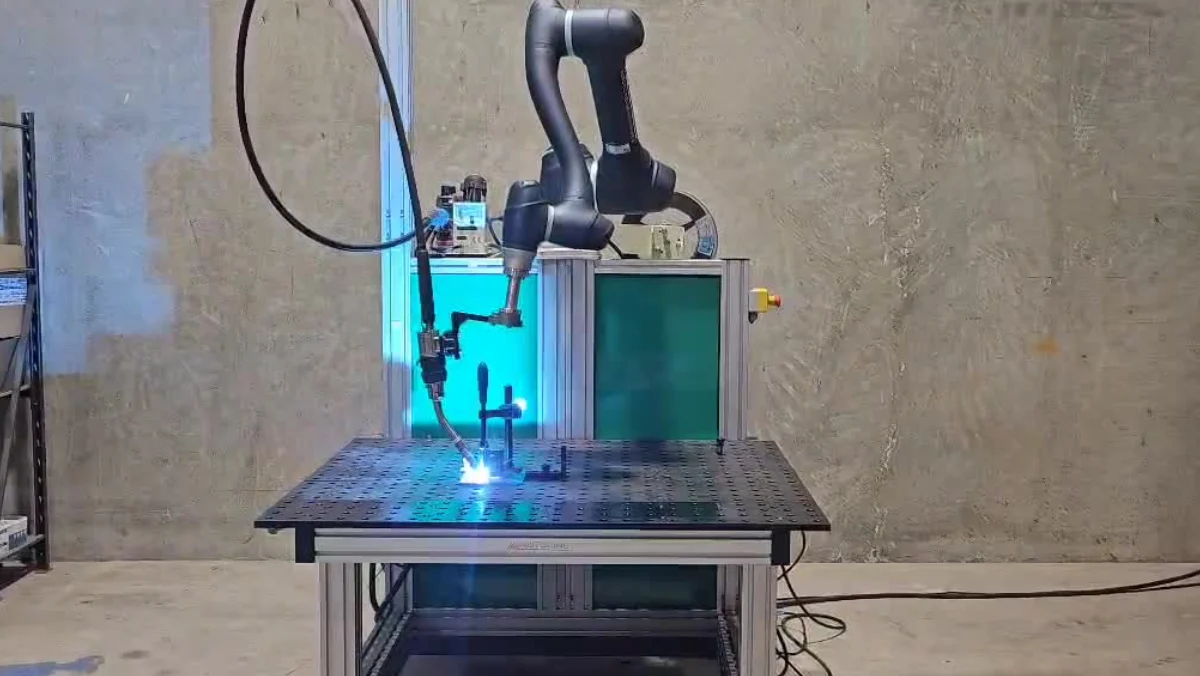
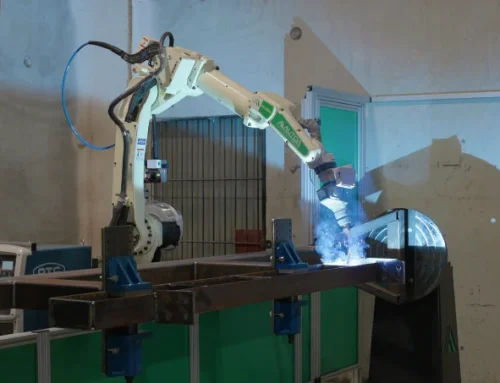
Autoa-CoWeld in action.
3. Easy to Learn, Fast to Use
Autoa-CoWeld is designed to be operated by your existing team. Programming can be done by guiding the robot arm or using the teach pendant to set key points with precision.
The system also includes AutoaWeld software, which allows weld paths to be planned and simulated offline. This reduces setup time between jobs and gives operators the confidence to manage changeovers efficiently.
With structured training provided by Autoa, operators are quickly equipped to run the system and maintain consistent weld quality from the start.
4. A Good Fit for High-Mix, Low-Volume Work
Collaborative welding is well suited to production environments where part types change frequently. Autoa-CoWeld allows fast changeovers and easy job recall, without the need for reprogramming from scratch.
This makes it a strong fit for jobbing work, high-mix production, and manufacturers managing multiple product lines. The system adapts quickly while maintaining consistent weld quality.
5. Supported Across Australia and New Zealand
Autoa supplies, installs, and supports collaborative welding systems across both Australia and New Zealand. That includes operator training, technical support, and servicing over the life of the system.
Autoa-CoWeld is already in use in a range of workshops. Our team works directly with each site to ensure the system is set up correctly, operators are confident, and production stays on track.
A Practical Addition to the Workshop
Collaborative welding is a valuable option for manufacturers working with varied parts, shorter runs, or limited floor space. Autoa-CoWeld delivers reliable performance in a compact format, with the flexibility to handle changeovers and the simplicity to be operated by your own team.
If you’re exploring ways to increase welding capacity or introduce automation into a new area of your workshop, talk to the Autoa team today to find out how collaborative welding could support your production.
hello@autoaweld.com | AU: 1800 573 228 | NZ: 0800 37 55 66
Share this article