5 Signs Your Robot Welding Software Is Holding Production Back.
Published on 21 January 2026
Robot welding is adopted to improve consistency, throughput, and predictability. When those outcomes are not achieved, attention often turns to hardware capability, weld parameters, or operator training.
In many operations, the limiting factor is less visible. Robot welding software has a direct impact on how well a cell performs under everyday production conditions. When the software layer does not align with production needs, the result is lost output, reduced confidence, and avoidable downtime.
The following signs commonly appear in workshops where robot welding software is constraining performance rather than supporting it.
1. Minor changes distrupt production flow
In a production environment, change is routine. Drawing revisions, material variation, and fit up differences are expected. When small changes require programs to be rebuilt, production stopped, or external support brought in, the robot welding software is not supporting operational flexibility.
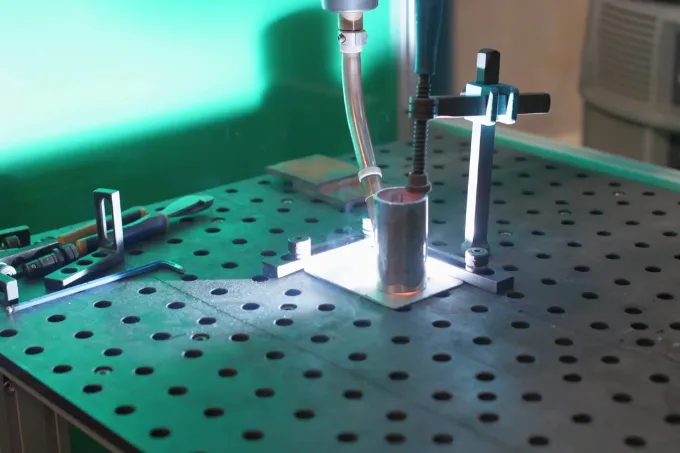
High performing robot welding cells absorb change through offline adjustments and controlled updates that do not interrupt the shift. If change consistently results in downtime, production capacity is being restricted at the software level.
2. Knowledge is concentrated in a single role
Robot welding software that can only be safely used by a specialist creates operational risk. When program changes, fault recovery, or job setup depend on one individual, production continuity becomes fragile.
Well designed robot welding software enables broader use. Supervisors and trained operators can manage routine adjustments without compromising safety or weld quality. When this is not possible, output becomes dependent on availability rather than demand. This limitation often becomes more visible as businesses attempt to scale robot welding production or extend shift coverage.
3. Production planning lacks reliability
Accurate planning relies on knowing what will happen before a part reaches the robot welding cell. If cycle times, reach constraints, or sequencing issues only become apparent during live welding, planning confidence erodes.
Robot welding software should support validation before production starts. This includes realistic cycle time estimates, collision checking, and visibility of physical constraints. When the workshop becomes the proving ground, the cost is paid in rework, rescheduling, and lost robot welding capacity.
4. Weld quality varies between shifts
One of the main drivers for adopting robot welding is reducing variation. When weld quality changes depending on the shift or operator, the process is not sufficiently controlled.
This often indicates that too much process knowledge sits outside the robot welding software. Reliance on manual judgement, informal adjustments, or undocumented practices allows quality to drift over time. Consistent robot welding output requires software that embeds process intent clearly and repeatably, regardless of who is operating the cell.
5. Improvement becomes difficult over time
Robot welding cells should become easier to run as experience grows. Programs are refined, changeovers shorten, and production confidence increases. When improvement stalls, it is often because robot welding software changes feel risky, time consuming, or poorly supported. Teams avoid optimisation because the effort required outweighs the benefit. In these cases, the software becomes a ceiling on robot welding performance rather than a tool for ongoing improvement.
Why this matters for robot welding performance
Robot welding software defines how a cell behaves under real production conditions, not just during commissioning. Software that supports flexibility, visibility, and consistency allows production teams to respond to variation without losing output. Software that does not introduces hidden bottlenecks that are often misattributed to equipment or people.
For manufacturers assessing robot welding performance, these signs provide a practical way to determine whether current robot welding software is supporting production goals or quietly limiting them.
AutoaWeld software is developed specifically for robot welding production environments where flexibility, repeatability, and uptime matter. It is built alongside the welding cell itself and supported locally, with ongoing development informed by live workshop use. If you are reviewing whether your current robot welding software is supporting production or limiting it, AutoaWeld software is designed to address the exact constraints outlined above.
hello@autoaweld.com | AU: 1800 573 228 | NZ: 0800 37 55 66
Share this article