Laser Welding Explained: What It Is and How It Works
Published on 23 June 2025
Laser welding is a high-precision process that uses a focused beam of light to fuse metal parts together. Valued for its speed, accuracy, and minimal distortion, it produces clean, strong, and repeatable welds across a wide range of applications. At Autoa, we make laser welding part of our mission to simplify robotic welding for manufacturers in Australia and New Zealand.
This guide explains what laser welding is, how it works, where it is used, and how it compares with traditional welding methods like MIG and TIG. The aim is to help you decide if it is the right fit for your production needs.
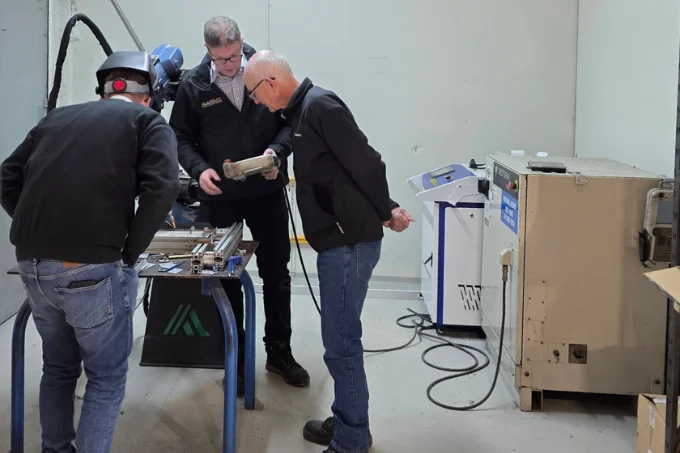
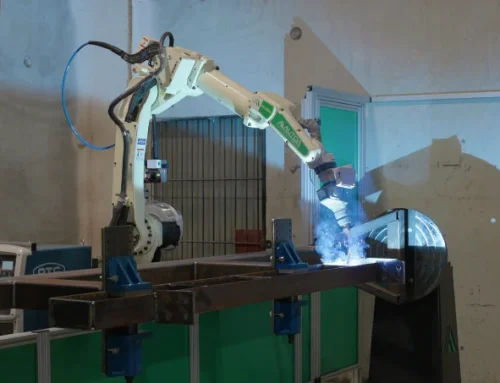
Weld trials underway on Autoa’s in-house laser welding demo cell.
What Is Laser Welding Used For?
Laser welding is commonly used in applications where precision, speed, and low heat input are critical. It supports a broad range of industries, including:
Electronics: Enclosures, battery tabs, sensor housings
Medical Devices: Surgical tools, implants, micro-welding
Aerospace: Thin-walled structures, turbine blades, brackets
Metal Fabrication: High-end consumer goods, stainless steel and aluminium assemblies
Laser welding is especially effective for joining aluminium and steel. Its concentrated energy reduces heat distortion and improves weld consistency, which is valuable when working with reflective or thermally conductive materials such as aluminium.
It also produces narrow, clean welds with minimal post-processing. This makes it well suited to applications where cosmetic appearance and tight tolerances are essential. At Autoa, we work with manufacturers across Australia and New Zealand to help them apply these advantages in their welding operations.
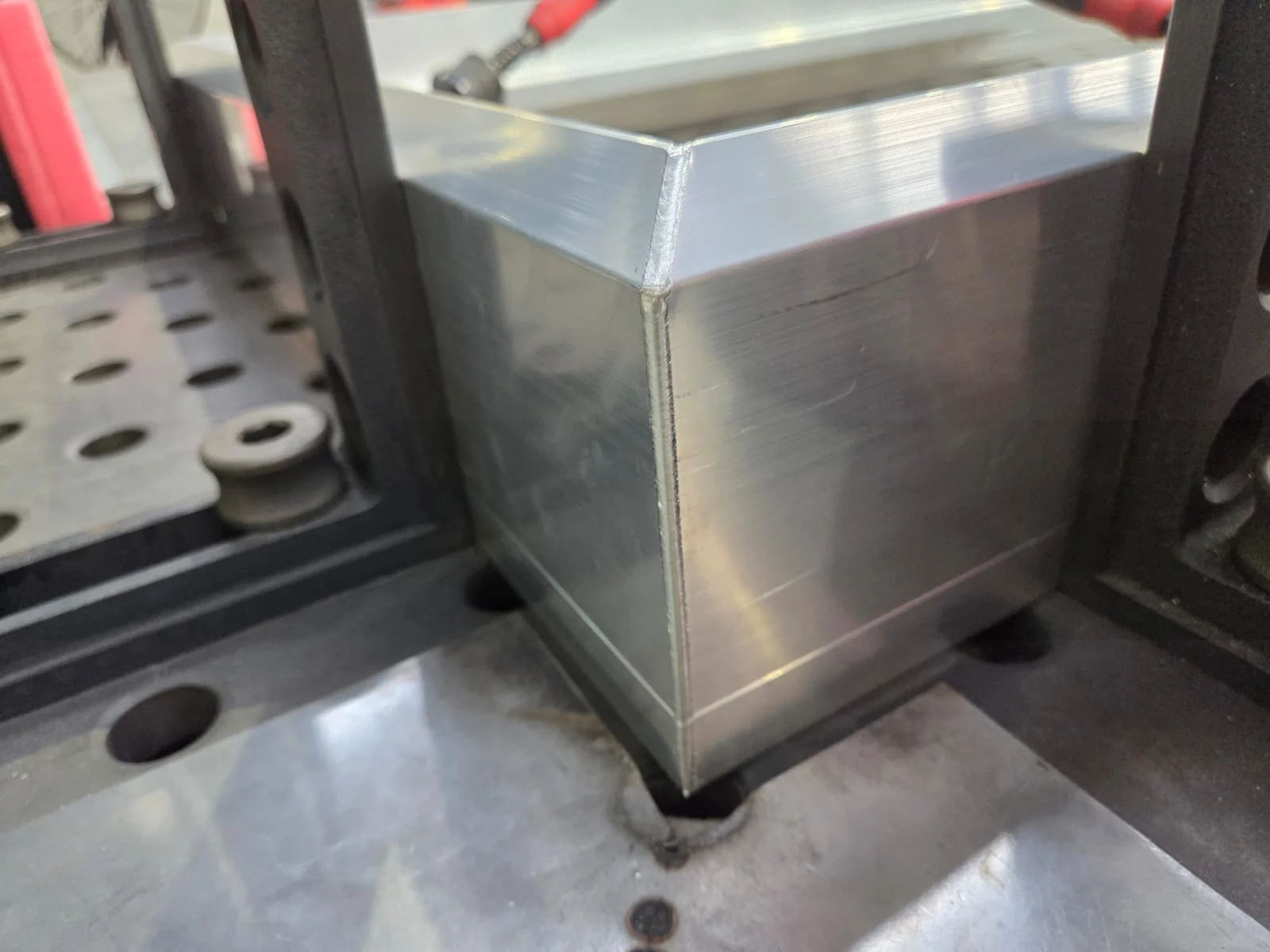
Tight, precise welds on aluminium using laser welding.
How Does Laser Welding Work?
Laser welding works by concentrating a high-energy light beam onto the joint between two materials. This heat melts the metal at the interface, and as it cools, the parts fuse together to form a solid, precise weld.
There are two primary modes of laser welding:
Conduction welding: The laser melts only the surface of the material. This is used for shallow welds where appearance is critical.
Keyhole welding: The laser penetrates deeper, forming a narrow, high-strength weld. It’s commonly used for structural or load-bearing parts.
Depending on the application, laser welding can be carried out manually, semi-automatically, or fully automated within a robotic welding cell. At Autoa, we specialise in integrating laser welding into robotic systems to deliver accuracy, repeatability, and efficiency for manufacturers in Australia and New Zealand.
How Is Laser Welding Different from MIG and TIG Welding?
Laser welding differs from MIG (Metal Inert Gas) and TIG (Tungsten Inert Gas) welding in how heat is applied and how the weld is formed. Laser welding uses a concentrated beam of light to create a narrow heat source, which allows for precise welds with minimal thermal distortion. This is especially valuable in applications involving thin materials, fine features, or tight tolerances. MIG and TIG welding use an electric arc to generate heat, which spreads energy over a wider area and creates a larger heat-affected zone.
Another distinction is the use of filler material. MIG welding typically relies on filler wire. TIG welding may use filler or be performed autogenously, depending on the requirements. Laser welding is often autogenous as well but can incorporate filler wire when bridging gaps or joining dissimilar metals.
Each of these methods can be integrated into robotic systems. Laser welding is often selected for high-speed, precision tasks such as electronics or battery components. MIG and TIG processes are commonly applied in structural steel, heavy fabrication, and general manufacturing. By adjusting parameters, each technique can be adapted to meet goals such as throughput, weld strength, or material flexibility.
Every method has advantages, and the best choice depends on factors such as application, material type, production volume, and process objectives. Autoa provides guidance across all three, helping manufacturers in Australia and New Zealand select the right technology for their operation.
What Materials Can Be Laser Welded?
Laser welding is compatible with a wide range of metals and alloys, including:
- Stainless steel
- Mild steel and carbon steel
- Aluminium
- Copper
- Titanium
- Nickel and cobalt-based alloys
Material reflectivity, thickness, and thermal conductivity all influence the choice of laser type and settings. Today’s laser welding technology is capable of joining materials from ultra-thin foils to structural-grade components.
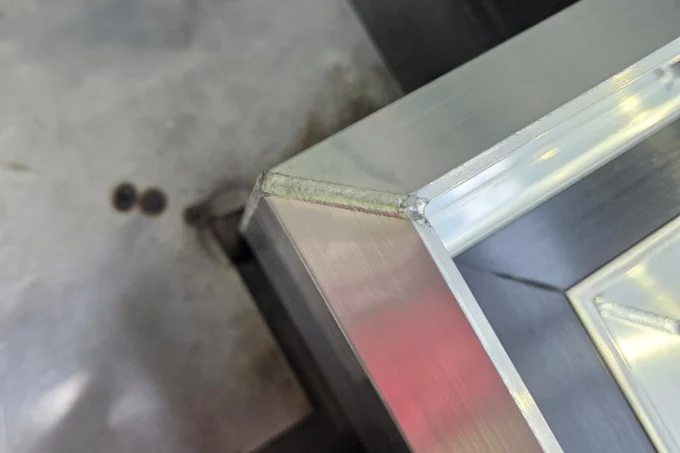
Laser-welded aluminium corner with a clean finish.
Autoa brings experience across MIG, TIG, and laser welding. We support manufacturers in Australia and New Zealand with practical advice and configured robotic systems that simplify welding processes. If you are exploring laser welding, our in-house demo robot can be used to run trials and evaluate the best approach for your parts and workflow.
Laser welding offers speed, accuracy, and consistent quality across a wide variety of applications. It is ideal whereve clean welds, tight tolerances, and reliable performance are required, whether in medical tools, battery components or stainless steel assemblies.
Talk to us for no-obligation advice on how laser welding could work for your parts and process.
hello@autoaweld.com | AU: 1800 573 228 | NZ: 0800 37 55 66
Share this article