Why Robot Welding?
Why Robot Welding Matters for Modern Fabrication.
Robot welding has moved well beyond high-volume automotive production. Today, manufacturers and fabricators are using robotic welding to improve consistency, increase capacity, and reduce reliance on skilled labour, even in high-mix and project-based environments. With the right system design and software, robot welding becomes a practical production tool that supports real workshop workflows rather than disrupting them.
The Limits Of Manual Welding.
Manual welding remains essential, but it introduces constraints that are difficult to scale:
- Weld quality varies due to fatigue, technique, and working conditions
- Production output is limited by labour availability
- Rework and scrap increase costs and extend lead times
- Skilled welders are increasingly difficult to recruit
- Repetitive welding tasks expose operators to heat, fumes, and strain
As workloads increase and delivery timelines tighten, these challenges become harder to manage using manual processes alone.

What Robot Welding Delivers.
Increased Productivity
Robots maintain high arc-on time, work consistently across shifts, and reduce cycle times. This allows manufacturers to increase throughput without increasing headcount.
Consistent Weld Quality
Robot welding delivers repeatable weld paths and controlled parameters, reducing variability, rework, and quality risk. This is critical for fabricators working to structural and certified standards.
Lower and More Predictable Costs
Automating repetitive welds reduces dependency on scarce labour and improves cost predictability across projects and production runs.
Improved Health and Safety
Robots remove operators from hazardous welding environments. Collaborative robot systems further improve safety by allowing people and robots to work alongside each other.
Flexibility for High-Mix Production
Modern robot welding systems, supported by the right software, adapt to frequent changeovers and varied part geometries without excessive downtime.
Robot Welding Is Not One-Size-Fits-All.

Why Software Is Critical to Successful Robot Welding.
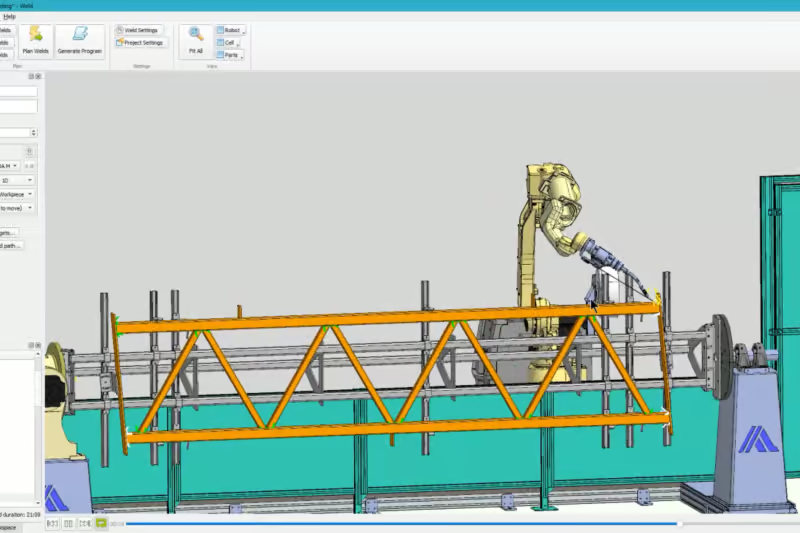
The effectiveness of robot welding depends as much on software as it does on the robot itself. Programming speed, changeover efficiency, and adaptability determine whether automation improves production or becomes a bottleneck.
Autoa robot welding systems are driven by AutoaWeld software, enabling efficient offline programming, weld planning, and adaptation to part variation. This reduces setup time, limits reliance on specialist robot programmers, and allows workshops to respond quickly to changing job requirements.
Where Robot Welding Delivers the Most Value.
Robot welding is most effective where manufacturers need to:
- Increase capacity without expanding labour
- Improve consistency across repetitive or critical welds
- Reduce rework and quality variation
- Maintain flexibility in high-mix, low-volume production
- Improve safety and working conditions
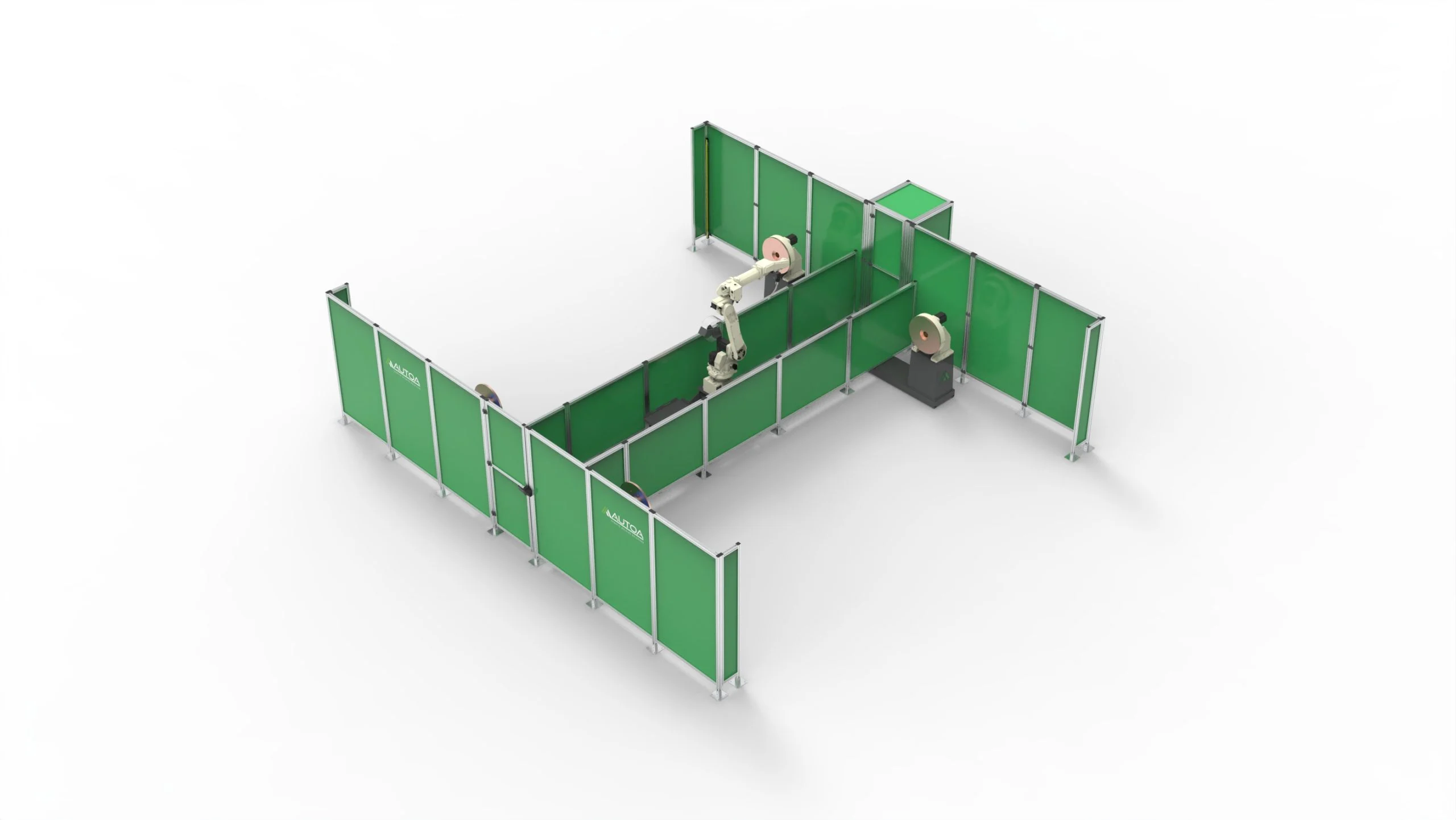
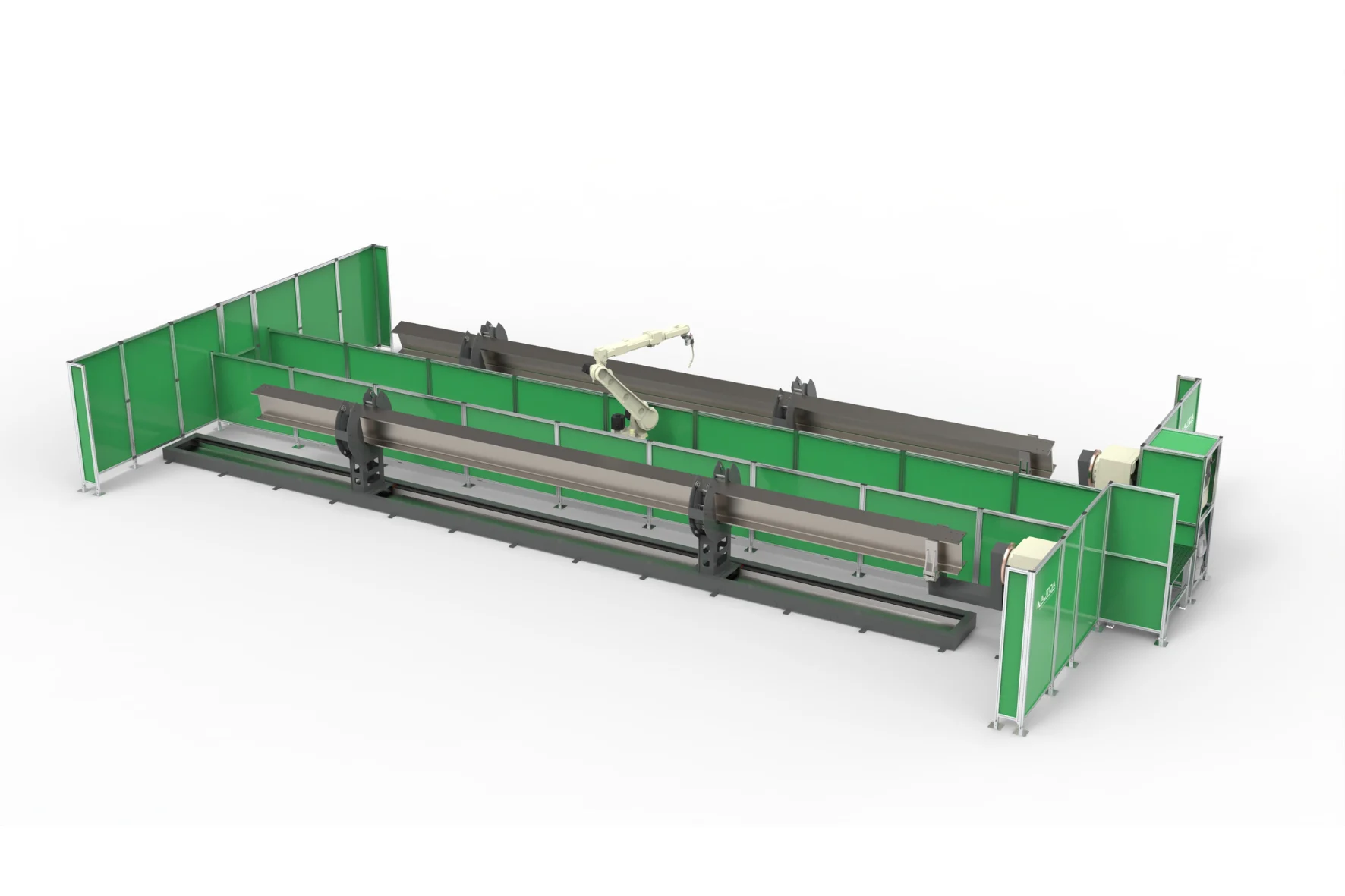
From collaborative cobot cells to large-scale structural welding systems, robot welding can be scaled to suit the application rather than forcing the application to suit the robot.
Robot Welding, Simplified.
Robot welding should improve productivity without adding complexity. With the right system design, software, and support, automation becomes a practical extension of the workshop.
Autoa focuses on delivering robot welding solutions that align with real fabrication workflows, making automation accessible, adaptable, and scalable.

Increase Productivity.
Meet increasing demand and expand capacity with ease. A single robot can replace the workload of 7-8 manual welders, reducing cycle times while delivering precise, consistent results.

Lower Production Costs.
Reduce overheads and operational expenses with optimised consumable usage, fewer labour requirements, and minimised waste.

Enhance Flexibility.
Robotic welding systems easily adapt to high-mix, low-volume production, offering the versatility needed to handle changing demands and diverse projects.

Consumable Savings.
Cut down on gas, wire, and other materials. Robots optimize weld parameters to save resources and lower ongoing costs.

Improved Health and Safety.
Robots reduce risks by automating hazardous tasks and accessing areas that are challenging or unsafe for manual welders.

Achieve Consistent Quality.
Robots deliver precise, high-quality welds with every pass, ensuring your products meet the highest standards without the inconsistencies of manual welding.
CONTACT US
Ready To Simplify Your Welding Process?
Take the next step with robotic welding—boost productivity, cut costs, and make every weld count. Let’s make it happen.