Nepean Engineering Case Study
Advance Fabrication Capability with Robotic Welding.
Background
Nepean Engineering is part of the wider NEPEAN group, one of Australia’s largest privately owned engineering service providers. Operating from New South Wales, the business supports sectors including mining, transport, infrastructure, and heavy industry.
Nepean Engineering manufactures complex structural components and heavy fabricated assemblies. These products demand consistent weld quality, repeatability across batches, and reliable production scheduling. As production requirements increased, Nepean identified an opportunity to introduce robotic welding to strengthen weld consistency and improve throughput on repeatable components.
Project Overview
Customer: Nepean Engineering
Product: Fabricated assemblies
Country: Prestons, Australia
Installed: 2025
Industry: Heavy engineering and industrial manufacturing
Solution: U-6000 robot welding cell
Featured Equipment: OTC FDB6L Long Reach Welding Robot, FD-19 Robot Controller + Teach Pendant, OTC P502L Power Source, RTW5000H-10 Water Cooled Torch, 1PC1000 Positioner, 2PF1000 Positioner, AutoaMotion Sliding Floor Track, Integrated Safety Componentry.
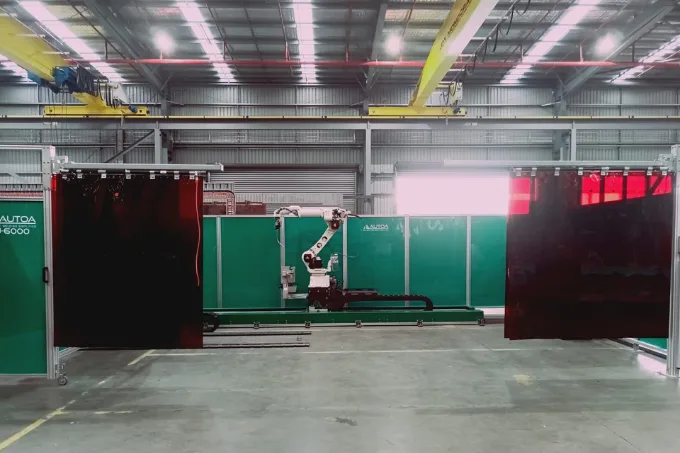
Front view of the U-6000 robotic welding cell at Nepean Engineering’s new facility.
The Solution
Autoa supplied a U-6000 robotic welding cell configured for Nepean Engineering’s structural fabricated assemblies, working closely with their team to match the system to part requirements, weld procedures, and fabrication workflow within their new facility.
The U-6000 provides a larger format welding station suited to heavy structural components, with integrated positioners and capacity to handle longer and higher mass assemblies. Autoa completed the full setup, including jig configuration, robot programming, weld optimisation, and factory testing prior to delivery.
Following installation in 2025, the cell was commissioned and validated on site, with operator training provided to ensure Nepean’s team could transition into production immediately.
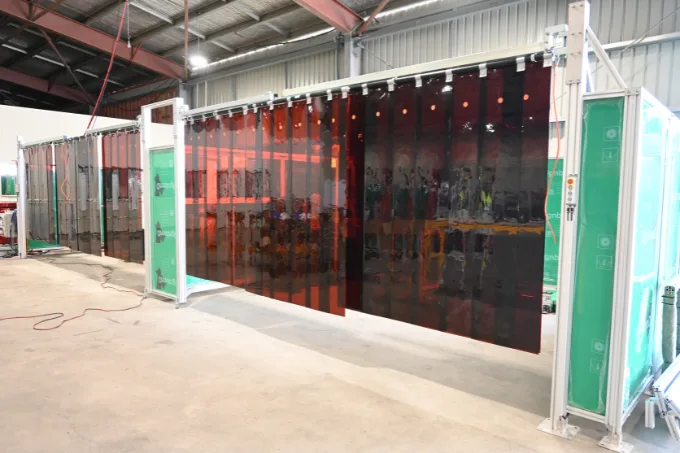
Welding curtains enclosing the U-6000 cell.
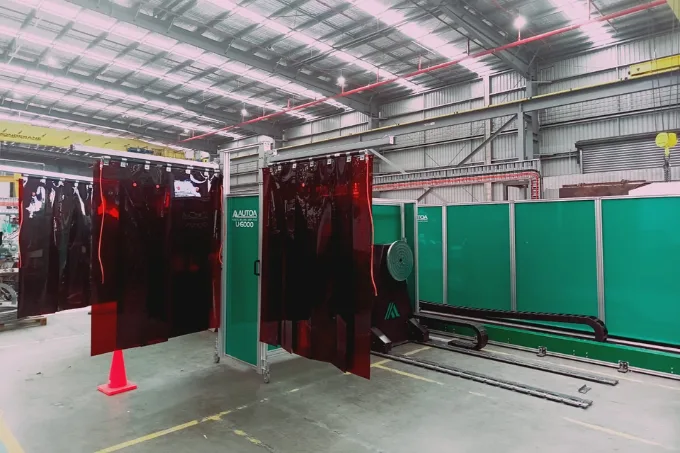
Sliding wall within the U-6000 cell.
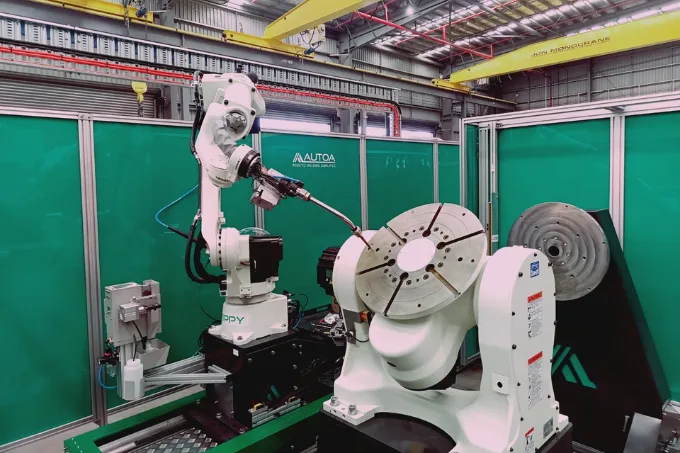
FDB6L welding robot inside the U-6000 cell.
The Results
Since installing the U-6000 robotic welding cell within their new facility, Nepean Engineering has seen improved consistency across their structural fabrication processes. Weld quality is now uniform from part to part, with repeatable positioning and controlled parameters reducing variation between shifts.
Cycle times have become more predictable, giving the team stable throughput across repeat production runs. The robot now manages programmed weld sequences, allowing skilled fabricators to focus on fit-up, preparation, and higher complexity work.
The larger format capacity of the U-6000 supports heavier assemblies with consistent control. Integrating the cell into the new facility layout has streamlined workflow, reduced handling interruptions, and strengthened overall production stability.
The IMPACT ON Nepean Engineering’S BUSINESS
The introduction of the U-6000 robotic welding cell has strengthened Nepean Engineering’s fabrication capability within their new facility. By integrating robotic welding from the outset, the business has established a stable and repeatable production platform for structural assemblies. This supports higher volume work without increasing reliance on manual welding for repetitive tasks.
The cell has also improved how labour is allocated across the workshop. Skilled welders can now focus on complex fabrication and specialised projects, while the robot manages programmed, repeatable weld sequences.
Overall, the installation has positioned Nepean Engineering with scalable welding capacity, improved production control, and greater confidence in meeting delivery commitments across future contracts.
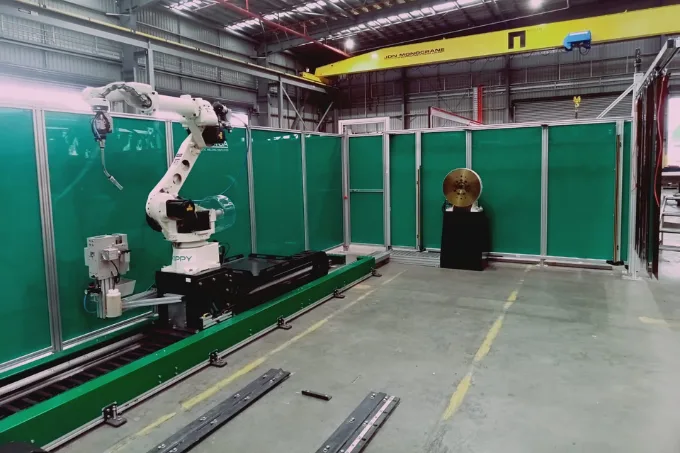
U-6000 robotic welding cell installed in the new facility.
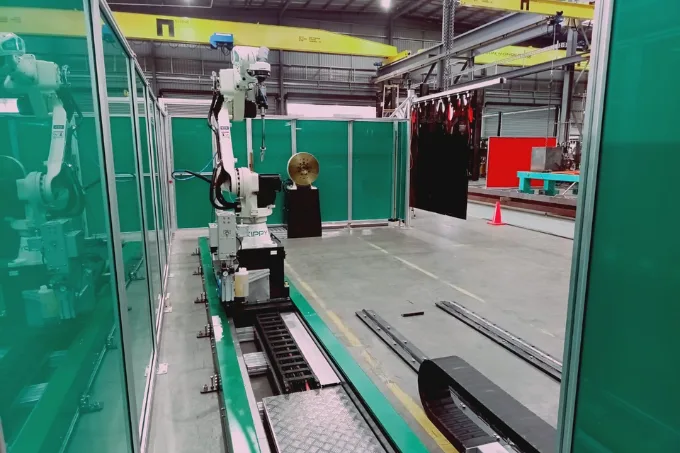
AutoaMotion sliding floor track within the U-6000 cell.
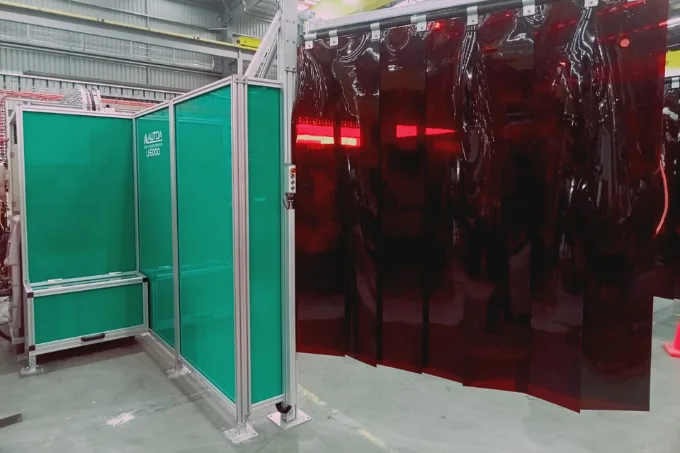
Safety guarding and welding curtains enclosing the U-6000 cell.
Contact Us
Start Your Robotic Welding Journey Today.
Let’s talk about how our robotic welding solutions can help your business. As a 100% family-owned company, we’re focused on making robotic welding simple and supporting you every step of the way.